Written by Lize Testa, Foster Mum
Warm, fluffy, but wild and free!
Cute, fluffy-tailed, shiny-eyed woodland creatures. That’s how most of us think of the little animals that live in the trees around us. Many people are even tempted to keep them as pets, to the detriment of the squirrels. But squirrels are at great risk too, and the need for dedicated, trained squirrel rescue organisations is great.
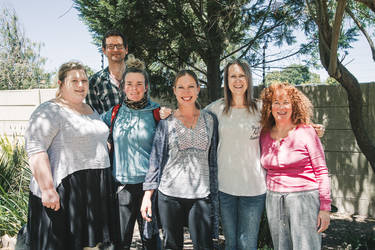
Founder of Squirrel Rescue and Rehab Western Cape, Tracy Starke, has always been passionate about animals, but when her friend Kevin Jenkins handed over a squirrel his dogs had found in January 2011, an exciting new journey began.
Since then, Tracy, with the help of Dr Steve Smit and Dee Hazel (who’s been doing squirrel rescue for close to 25 years), has rescued and rehabilitated countless squirrels. Tracy Boddy joined Tracy Starke in 2015, and in April 2016, they decided to start a more formal group on Facebook and WhatsApp: Squirrel Rescue & Rehab Western Cape. This has since been registered as a non-profit organisation.
This group has so many amazing facets and stories.
Education
All animal rescue starts with educating humans. Once you understand why a squirrel shouldn’t be kept alone, why there’s a gradual rehabilitation and release, and why releases happen in certain areas, you won’t want to keep a squirrel captive. Regular updates with tips on what to do when you find a squirrel are posted on the group’s Facebook page (Squirrel Rescue and Rehab Western Cape). Training sessions on how to become involved with rescue and rehabbing squirrels are offered twice a year and are free of charge.
Guidance
The majority of the group’s rescuers are located in the Western Cape, but that doesn’t prevent squirrel lovers all over the world from asking for guidance.
All the way from Sri Lanka, a lady who rescued two Palm Squirrels that were kept as pets contacted the group. These squirrels were kept in captivity and were mostly fed wheat/bread, and both were being treated for seizures. Tragically, upon further investigation, it turned out that they had Metabolic Bone Disease (MBD), due entirely to the diet they were being fed and the way in which they were kept. Fortunately, with the guidance from volunteers on the group, the two Palm Squirrels made a great recovery and are doing very well.
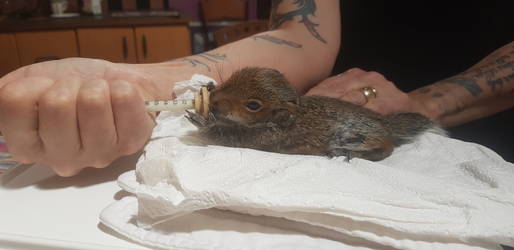
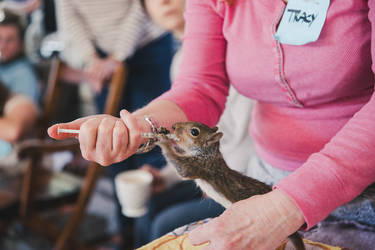
A rescuer from Gaborone in Botswana recently contacted the group with a tiny week-old Tree Squirrel (indigenous to Africa). At the time that she discovered the squirrel, she wasn’t in a position to find syringes, teats or milk for the baby. Britt Ballantine, one of the volunteers, assisted her, and between them they were super inventive. The closest they could come to a bottle or syringe was an eye ointment tube, and the only milk they could find at that stage was from an actual goat. A mixture of the goat milk and human-grade probiotics pulled the baby through and, five weeks later, she’s the most beautiful, flourishing squirrel.
Another rescuer posted her story on how her daughter had found a young squirrel they named Coco. She explains how she tried to keep Coco caged up, only to later realise that squirrels are meant to roam the tree tops. Coco fell pregnant a few months later but sadly lost her babies. You can read all about Coco’s journey here.
Rescue
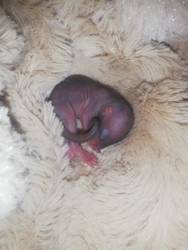
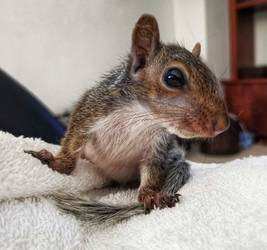
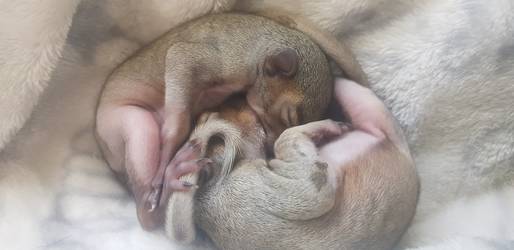
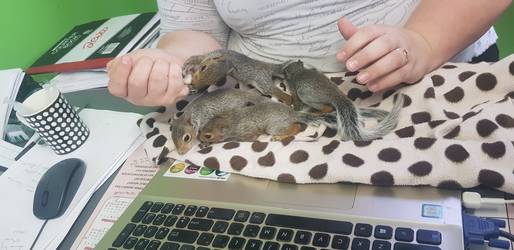
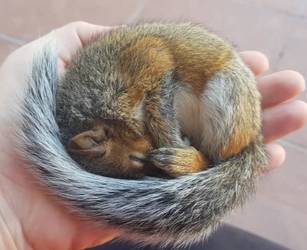
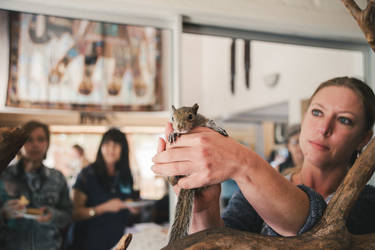
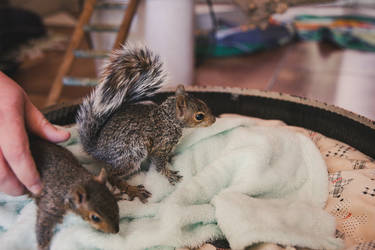
Squirrel babies (called kits or kittens) come to the group in various ways – from tree fellers to farm workers, school children and Facebook users. Each baby from someone who decided to make a difference in a beautiful creature’s life. Late on a Saturday afternoon, one of the volunteers was contacted by a lady in an informal settlement requesting assistance with a baby squirrel. Her friend found the baby screaming next to a tree that had blown over the previous day. She kept the baby warm in a box with a fluffy blanket and a warm water bottle until she could get hold of someone to care for it. Baby Xena (warrior princess) got her name from the volunteer who fought with her husband to get into the area, where violent protests erupt regularly.
Some squirrel finders need a little more convincing to surrender the kits they find. Most finders have the best intentions when they find a squirrel and decide to raise it, but it often ends in heartache and tears. Squirrels aspirate very easily and need the right formula at the right times in order to grow into healthy squirrels that can be rehabilitated.
Rescues also come in the form of pets that can no longer be handled. Squirrels make TERRIBLE pets. As they grow up, they become extremely possessive, and you’ll probably be the only person who can handle your squirrel. You won’t be able to spend time with family or friends or go away for a weekend when you’re owned by a squirrel. They chew, scratch and sometimes even bite. Squirrel diets are expensive, and squirrel vets are even more expensive. Due to their high energy levels, they need to be kept in large enclosures to allow them to jump and play safely – and there are few things as sad as seeing a squirrel in a cage. While it’s not illegal to keep Eastern Grey Squirrels as pets in South Africa, no wild animal should be kept in captivity.
Rehabilitation
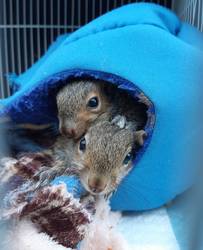
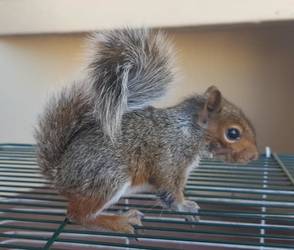
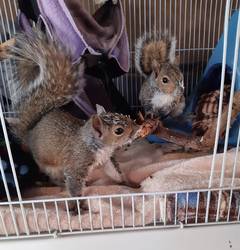
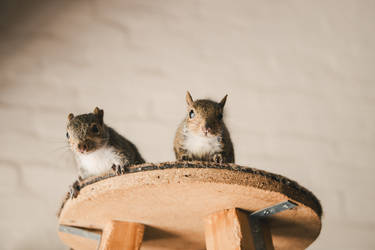
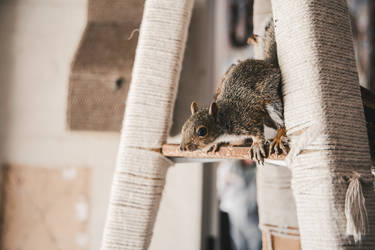
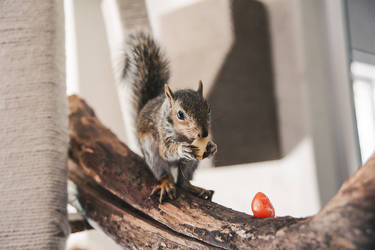
When babies are between 12 and 16 weeks old, they’re ready to be rehabilitated. This involves them first getting “wild” in a wilding cage, with minimal human interaction. Then slowly being released into an area where they’ll be safe and where they won’t be a nuisance to humans.
Even though volunteers make the work lighter, the bills still need to be paid. Raising squirrels is costly. A tin of milk ranges between R250 and R350. Once they start to eat, squirrels need special rat pellets, fresh fruit and veggies and, of course, a few nuts for treats. Very few vets can assist with squirrels, and when a squirrel requires medical attention, they end up at vets who specialise in exotic animals. Vet bills quickly add up! The group relies on donations from volunteers and the public to pay these bills.
Donations are always welcome:
- Milk (Royal Canin Puppy Milk)
- Pet carriers and cages
- Monetary donations
Cash donations can be made to the group’s BackaBuddy account.
For more information about Squirrel Rescue & Rehab Western Cape, contact Tracy Starke on 082 960 4859, or Lize Testa on 078 125 5354, email at info@squirrelrescue.co.za or follow us on Facebook.
A little more about squirrels…
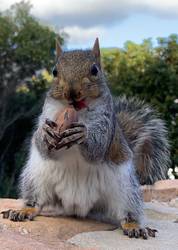
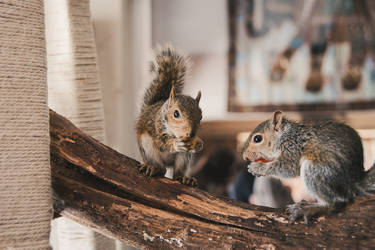
While the Cape Ground Squirrel and the African Tree Squirrel (also known as Smith’s Bush Squirrel) are indigenous to Africa, the Eastern Grey Squirrels weren’t always around.
2020 marks the unofficial 220th year of the love-hate relationship between the Eastern Grey Squirrel, introduced to South Africa by Cecil John Rhodes, and the South African people. In 1918, the Eastern Grey Squirrel was put onto the Cape Province’s “vermin” list, and the government paid a bounty to anyone who could prove they’d shot and killed a squirrel. Between 1918 and 1922, just over 11,000 squirrels were killed.
Looking back at the 1940s map that D.H.S. Davis submitted into Proceedings of the Zoological Society of London, with his paper on American Grey Squirrels, the distribution of the Eastern Grey Squirrel looks very much the same – mostly limited to the South West Cape. This is because grey squirrels are unable to utilise fynbos vegetation and because most of the indigenous trees in South Africa don’t bear berries or fruit suitable for their food requirements.
Unfortunately, squirrels are notorious for causing trouble while chewing on literally anything from wooden decks and furniture to electrical wires. Many people also don’t like that they eat food put out for birds, and some see them as pests. But the fact is that it’s us humans who are providing the kind of environment that’s conducive to them, us that brought them to South Africa, and us who create many of the situations that leave them in peril. So, it’s up to us to do our best to help them when they need us.
“Until one has loved an animal, a part of one’s soul remains unawakened.” – Anatole France