

Written by Dr Katherine Sparks (BVSC) of MediVet Hillcrest
Have you ever looked at your dog one evening and noticed a small patch of irritated skin, only to discover the following morning that it’s become a large, angry-looking, wet and painful sore? Hot spots can develop remarkably quickly, sometimes spreading over a surprisingly large area within hours.
Although they may initially look alarming, hot spots generally respond well to appropriate veterinary treatment. The important thing is to recognise them early, stop the cycle of itching and self-trauma, and identify what caused the problem in the first place.
What exactly is a hot spot?
A hot spot is a localised area of sudden skin inflammation, usually accompanied by damage to the skin surface and sometimes a secondary bacterial infection. They’re seen far more frequently in dogs than in cats.
Hot spots typically appear as red, moist, raw patches of skin that may ooze fluid, develop a sticky discharge or have an unpleasant smell. The surrounding hair is often matted, and hair loss may be extensive. These lesions can be extremely itchy and painful, making affected dogs desperate to lick, chew, scratch or rub the area.
Common sites include the cheeks, neck, behind the ears, hips, thighs and base of the tail. However, a hot spot can develop almost anywhere on the body.
Dogs with thick or long coats may be particularly susceptible because moisture and warmth can become trapped against the skin, especially where the coat is matted. Hot, humid weather can increase the risk.
Why do hot spots develop?
The key to understanding hot spots is recognising that the sore is often the result of an underlying problem that makes the dog itchy or uncomfortable.
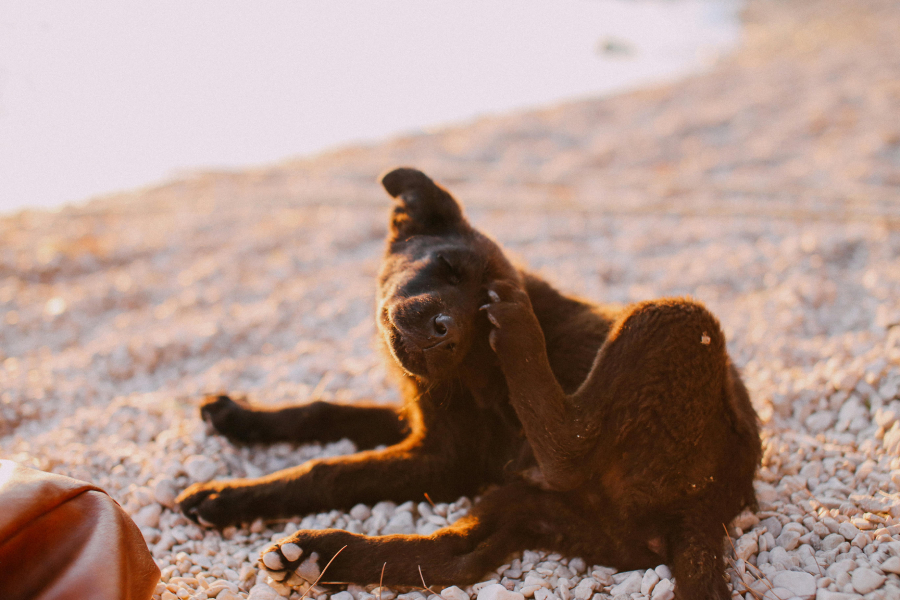
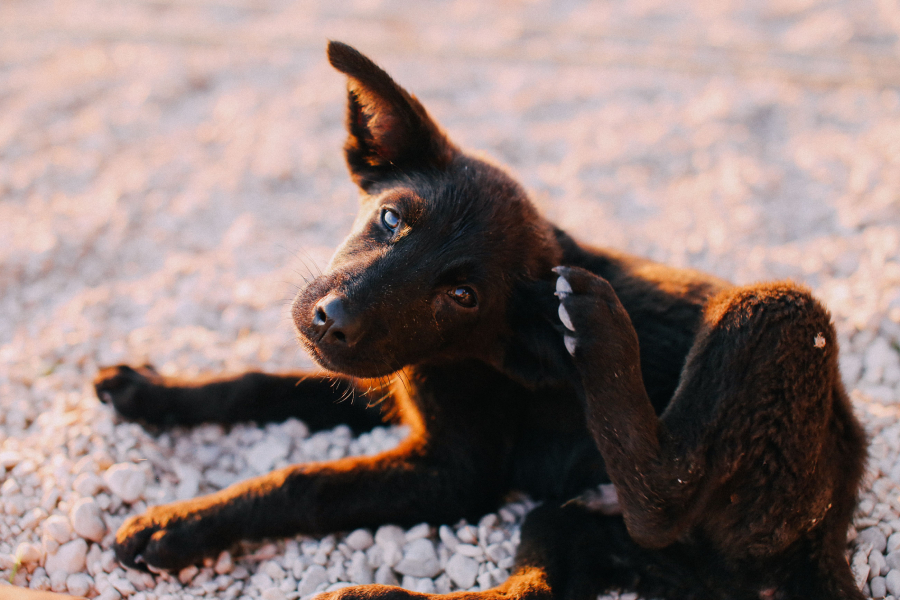
Something triggers the initial irritation and the dog responds by scratching, licking or chewing. This damages the skin, causing further inflammation and discomfort. The damaged area becomes even itchier, prompting more licking and scratching. Before long, a vicious cycle develops.
Several underlying problems can trigger this process:
-
Fleas and other parasites
Flea bites are one of the most important triggers. Some dogs are particularly sensitive to flea saliva, and even a small number of bites can provoke intense itching. Owners may not see any fleas, but this doesn’t rule out flea allergy dermatitis.
Ticks, mites and other biting insects may also contribute to skin irritation.
-
Allergies
Dogs with environmental allergies or adverse food reactions may experience persistent itching. Repeated scratching can damage the skin and trigger hot spots. In dogs with recurrent lesions, investigating an underlying allergic skin disease is particularly important.
-
Ear infections
Dogs with painful or itchy ears may scratch around their ears and neck, creating a hot spot in the process. Moisture trapped in the ears after swimming or bathing can contribute to ear problems in susceptible dogs.
-
Moisture and poor coat ventilation
Swimming, bathing, rain and humid weather can leave a dense coat damp for extended periods. Mats trap moisture and prevent adequate airflow, creating an environment in which the skin becomes irritated and vulnerable to infection.
-
Other sources of pain or irritation
Anal gland disease, local wounds, foreign material caught in the coat, arthritis or other painful conditions may cause a dog to lick or chew repeatedly at a particular area.
Identifying the initial trigger is essential, particularly when hot spots keep returning. Treating the visible sore without addressing the underlying cause may provide only temporary relief.
What should owners look out for?
Hot spots often appear suddenly, and the signs can progress rapidly. Look out for:
-
A red, moist or raw patch of skin.
-
Sudden, persistent licking, chewing or scratching.
-
Localised hair loss or fur that’s wet, sticky and matted.
-
Swelling, discharge or an unpleasant smell.
-
Sensitivity or pain when the affected area is touched.
-
Restlessness or difficulty settling because of discomfort.
The lesion may initially be hidden beneath a thick coat, so pay attention if your dog repeatedly scratches one particular spot or seems unusually uncomfortable during grooming.
If you discover a hot spot, arrange a veterinary visit as soon as you can. These lesions can be very painful, and what appears to be a straightforward hot spot may occasionally be another skin condition requiring different treatment.
How are hot spots treated?
Treatment depends on the size, severity and depth of the lesion, as well as the underlying cause.
-
Clipping and cleaning
The first step is usually to carefully clip the hair around the affected area. This allows the veterinarian to assess the full extent of the damage, remove matted hair and expose the skin so it can be cleaned properly.
Clipping may sound simple, but hot spots can be extremely painful. Some dogs need sedation to allow the area to be clipped and cleaned safely and without unnecessary distress.
The skin is then gently cleaned using an appropriate veterinary antiseptic preparation. Keeping the area clean and allowing it to dry are important parts of the healing process.
-
Relieving inflammation and discomfort
Hot spots can be intensely itchy and painful. Your veterinarian may prescribe medication to reduce inflammation, control itching and provide pain relief where necessary.
Appropriate topical preparations may also be recommended, depending on the condition of the skin.
-
Treating secondary infection
Damaged skin can become colonised by bacteria, and some lesions develop a more significant bacterial infection. Antibiotics may be necessary in selected cases, particularly when infection is extensive or extends deeper into the skin.
However, antibiotics aren’t automatically required for every hot spot. Your veterinarian will determine whether they’re appropriate based on the examination and any additional testing needed.
-
Stopping further self-trauma
One of the most important aspects of treatment is preventing your dog from licking, chewing or scratching the affected area.
An Elizabethan collar, often called a buster collar or cone, may be necessary until the lesion has healed sufficiently. Although dogs are rarely enthusiastic about wearing one, it can make a substantial difference to recovery.
-
Addressing the underlying cause
Flea control, treatment of ear infections, management of allergies or investigation of other sources of irritation may be needed to prevent recurrence.
With appropriate treatment, many uncomplicated hot spots begin to improve within a few days and heal over the following days to weeks, depending on their severity.
Can you treat a hot spot at home?
It’s tempting to reach for an antiseptic, an old tube of cream or a home remedy when you discover a sore on your dog. However, this isn’t always the best approach.
Hot spots can be painful, can spread quickly and may be difficult to distinguish from other skin diseases. Applying an unsuitable product can further irritate damaged skin or delay appropriate treatment.
Avoid using creams made for humans, essential oils, harsh disinfectants or leftover medications unless your veterinarian has specifically advised you to do so. Never use scissors to cut matted hair away from a sore, as it’s very easy to cut the already damaged skin.
Until your dog can be examined, try to prevent further licking or scratching with a suitable protective collar if it can be fitted safely. Seek veterinary advice rather than waiting to see whether a rapidly worsening lesion settles on its own.
How can hot spots be prevented?
While not every hot spot can be prevented, a few simple measures can significantly reduce the risk.
-
Maintain effective parasite control. Keep your dog on a reliable, veterinarian-recommended flea and tick prevention programme. Consistency is especially important in our local climate.
-
Keep the coat well groomed. Regular brushing helps prevent mats, particularly in long-haired and thick-coated dogs.
-
Dry your dog thoroughly. After swimming or bathing, make sure the coat is properly dried, paying particular attention to dense undercoats and areas where moisture becomes trapped.
-
Address itching early. Persistent scratching, licking or head shaking shouldn’t be ignored. These signs may indicate allergies, parasites or an ear infection.
-
Investigate recurrent problems. If your dog develops repeated hot spots, ask your veterinarian to investigate the underlying cause rather than treating each episode in isolation.
The bottom line
Hot spots may look like a skin problem that’s appeared out of nowhere, but there’s usually a reason your dog has started licking or scratching in the first place. The resulting inflammation can escalate quickly, leaving a painful, wet lesion that needs prompt attention.
The good news is that most uncomplicated hot spots respond well to appropriate treatment. Early veterinary intervention can relieve discomfort, speed up healing and help prevent a small irritation from becoming a much bigger problem.
If your dog suddenly develops a red, wet or painful patch of skin, don’t wait for it to get worse. Contact your veterinarian. A little early attention can save your dog a great deal of discomfort.